5 Networking Strategies That Will Transform Your Career
Five ways to build a network that leads somewhere, with sample messages for connection requests, informational interviews, and follow-ups.

Most useful networking doesn’t look like working a room with a stack of business cards. It looks like a two-line message to someone whose work you admire, a 20-minute call, and a thank-you note sent the next morning. Each of those is small. Done steadily over months, they’re how people hear about openings early and get introduced instead of applying cold.
Here are five strategies that cover most of what works, with sample messages you can adapt.
1. Make yourself easy to find online
Before anyone agrees to a call or passes your name along, they’ll look you up. Your profile has to say clearly what you do and what you’re good at.
Start with LinkedIn. Keep your headline, About section, and recent roles current, and use the words people in your industry actually search for. Our LinkedIn profile tips go through it section by section. If your field has other places where work gets seen, such as a portfolio site, GitHub, or a professional website, keep those up to date too.
Then connect with people in your field, and add a short note when you do. Say how you know them or why you’re reaching out, and don’t ask for anything yet:
Hi Priya, I enjoyed your talk on vendor onboarding at the supply chain meetup last week, especially the part about running small pilots first. I work in procurement and I’d like to stay connected.
Online communities and forums are the other half of this. Join a few groups related to your industry and take part: answer questions, share a resource that helped you, add something real to a discussion. Over time, people there start to recognize your name, which makes every later message warmer.
2. Show up at events and join a professional association
Industry events put you in a room with people who work on the problems you care about. Look for conferences, trade shows, local meetups, and virtual events in your field.
Go with a goal. “Network” is too vague. “Talk to three people who work at companies I’d like to join” or “find out how other teams handle month-end reporting” gives you something to do once you’re there. Introduce yourself, ask questions, and listen more than you talk. A few openers that work almost anywhere:
- “What brought you to this session?”
- “What are you working on right now?”
- “How did you end up in this field?”
Professional associations give you the same kind of contact on a regular schedule. Once you join, go to the meetings, and if you can, volunteer for a committee or a small leadership role. Working on a project together builds a stronger connection than a dozen conversations over coffee. Use the rest of what you’re paying for too: job boards, workshops, and other professional development.
Speaking and writing. If you have expertise to share, offer to speak at a workshop or webinar, or write for an association newsletter or industry publication. People often come up to speakers afterward to talk about shared interests, which means the networking comes to you.
Look outside your field. Some of the best connections come from groups tied to a hobby, a cause, or a neighboring industry. People there tend to approach familiar problems differently, and they may point you toward a role or a career change you hadn’t considered.
3. Find mentors and ask for informational interviews
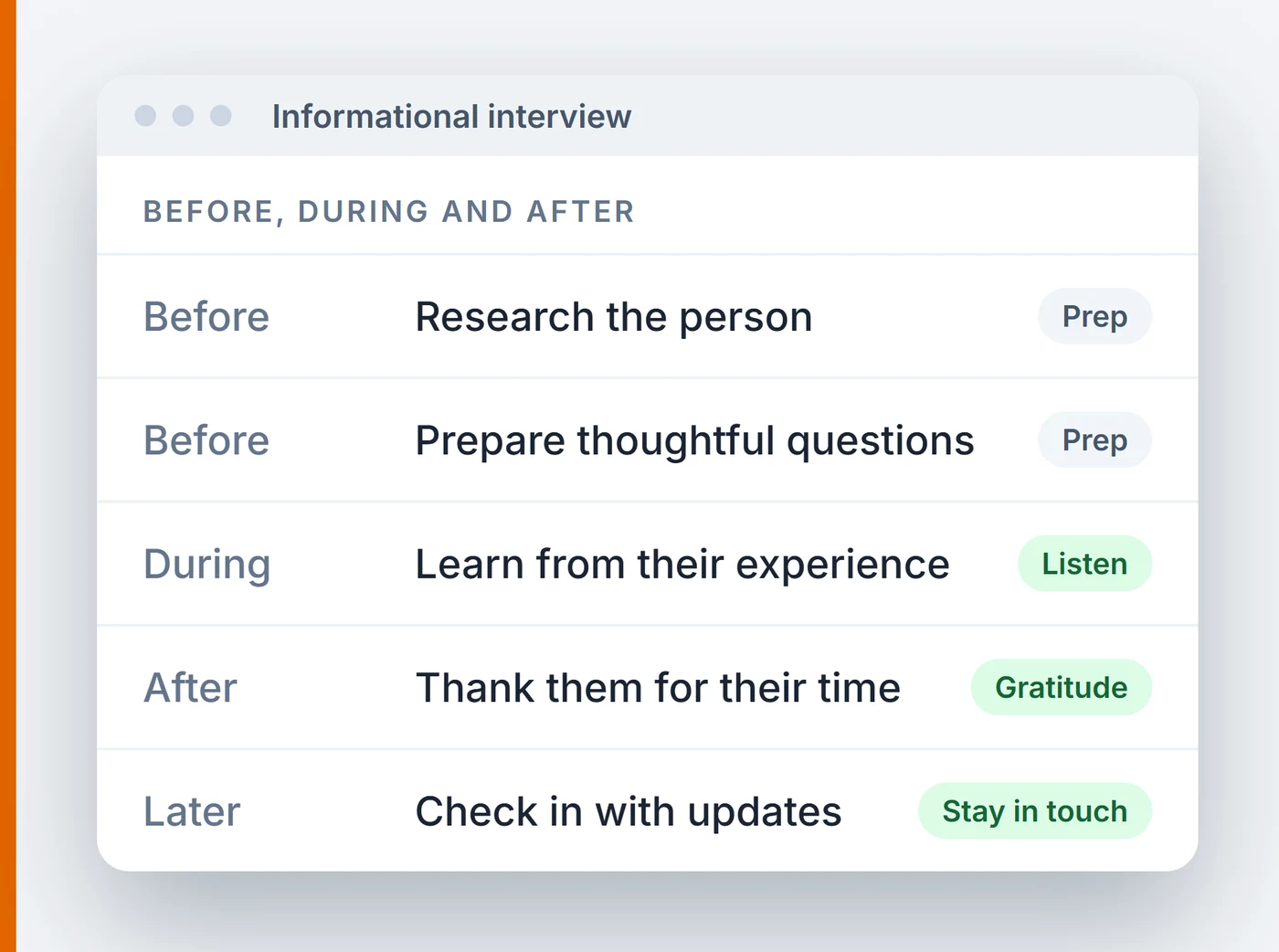
An informational interview is a short conversation where you learn about someone’s job and career path. It isn’t a request for a job, and saying so up front makes people far more willing to say yes.
Pick people whose careers you’d like to learn from, and do your homework: read their profile, look at anything they’ve written, and know why you’re asking them in particular. Then keep the request short and specific:
Subject: Question about your move into UX research
Hi Morgan,
I read your article on usability testing for small teams and found it really useful. I’m a graphic designer working toward a move into UX research, and I’d be grateful for 20 minutes to hear how you made the switch. A call or video chat works, and I’m happy to fit around your schedule.
Thank you, Alex
When you get the time, use it well. Arrive with a few questions, keep to the time you asked for, and don’t turn it into a job pitch. Questions that tend to get useful answers:
- “What does a typical week look like in your role, and what surprised you when you started?”
- “What skills or experience made the biggest difference in getting where you are?”
- “Is there anyone else you think I should talk to?”
That last question is how one conversation turns into three.
Some of these conversations grow into mentorships. If you’d like that, be clear about what you’re hoping to learn and why you think this person can help. Then keep it going: suggest regular check-ins, come with specific questions, and act on the advice. Mentorship goes both ways, so look for ways to help in return, such as pitching in on a project.
4. Ask for referrals and use your alumni network
A referral means someone is willing to put their name next to yours. That only happens when they trust you, so the groundwork is simple: be reliable, do good work, and treat your contacts as people rather than leads.
When you do ask, asking clearly is kinder than hinting. Be specific about the role, explain briefly why you fit, and make it easy to say no:
Hi Dana, I saw that your company is hiring a senior data analyst. I’ve been doing similar reporting work at my current job for three years. Would you be comfortable referring me, or pointing me to the hiring manager? I can send my resume and a two-line summary you could forward. No problem at all if it’s not a good fit.
Send the job link and your resume along with it. People are far more likely to help when helping takes five minutes. A clear ask like this isn’t begging. It gives someone what they need to help, plus an easy way out.
Your school is another network you already belong to. A shared background makes people more open to a first message. Search your school’s page on LinkedIn to find alumni at companies you’re interested in, and use career services or the alumni directory if your school offers them. Alumni events are an easy way to reconnect with classmates and former professors. Return the favor by answering questions from newer graduates or sharing openings you hear about.
5. Follow up and keep in touch
Most networking that goes nowhere fails at this step. You meet someone, have a good conversation, and never contact them again.
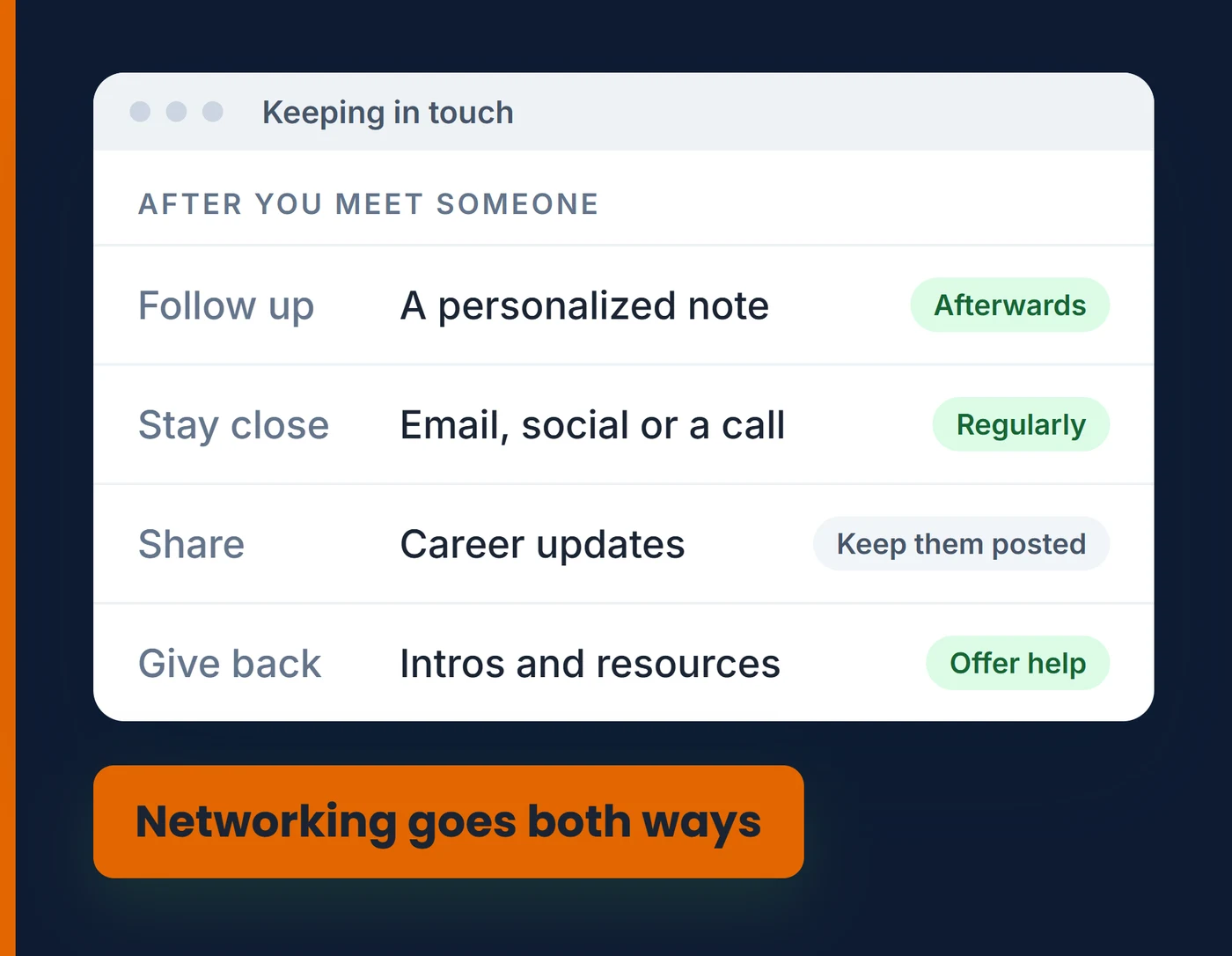
After any meeting, event conversation, or call, send a personal follow-up within a day or two. Mention something specific so they remember you:
Hi Sam,
Thanks again for talking with me after Thursday’s panel. Your point about tracking response times by channel stuck with me, and I’m going to try it with my team. Here’s the article on customer feedback surveys I mentioned. I’d like to stay in touch.
Best, Jordan
Then keep the connection alive. A simple spreadsheet works: name, where you met, when you last spoke, and what they’re working on. Every few months, reach out with something real: an article they’d find useful, congratulations on a new role, or a quick update on your progress. People who helped you especially want to hear how it turned out: “I took your advice about the certification, and it came up in my last two interviews.”
Offer help as often as you ask for it, through introductions, resources, or your own expertise. Ask about their work, too. A network you’ve stayed in touch with is the one that thinks of you when an opening comes up.
Start with one message
You don’t need to do all five at once. This week, update your LinkedIn headline, send two connection notes, and ask one person for an informational interview. Next month, go to one event and follow up with everyone you talked to. That pace is enough to build a network that’s working for you by the time you need it.
If you’re over 50 and have years of contacts to draw on, our guide to job searching after 50 covers how to put them to work.